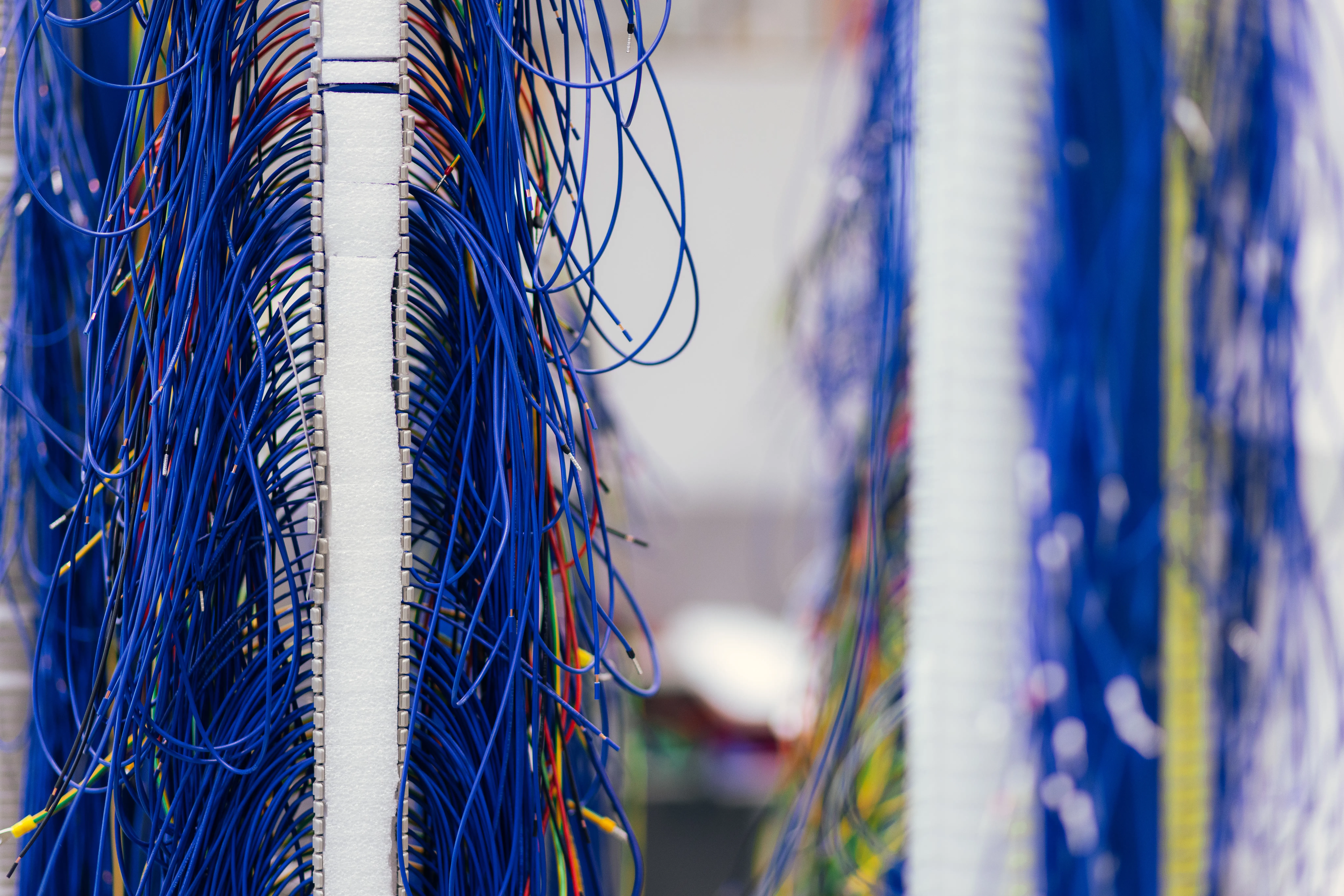
The robot that (still) doesn’t exist: Why automatic wiring isn’t standard yet?
While many parts of manufacturing have embraced robotics, there’s one area where the human hand still reigns supreme: wiring.
At BBC Bircher Automation, we build complex, custom-made control cabinets and every single wire matters. The idea of a robot handling all the wiring sounds like a dream. But the reality is that we’re not there yet. Not because we lack ambition, but because wiring, in its current form, presents unique technical challenges that robots still struggle with.
Why is wiring so hard to automate?
Wiring isn’t just “plug A into slot B.” In industrial applications, wiring must:
- Adapt to endless layout variations
- Handle different wire types, thicknesses, and connectors
- Consider bending radius, heat dissipation, and electromagnetic interference
- Be routed and fixed cleanly, with reliability and serviceability in mind
Even small deviations can lead to functional errors, reduced safety, or time-consuming rework. For now, experienced technicians still outperform robots in flexibility, precision, and problem-solving, especially in one-off or small-batch production.
The technology exists
There are automated wiring systems on the market, but they’re designed for high-volume, standardised production. Consider automotive assembly lines, where nearly every car is identical. That’s not our world.
We deal with bespoke solutions. Every cabinet is a custom project. The physical layouts, components, wire routes, and customer requirements vary each time. That makes programming a robot for each job economically and logistically unfeasible, for now.
Where we see opportunity
We’re not giving up on the dream. Quite the opposite.
We’re actively exploring how automation could help, even in hybrid ways:
- Semi-automated preparation
Automatic cutting, stripping, and labelling of wires already helps save time and reduce errors.
- Digital workflows
Our in-house tools (like MIREAM) guide human operators through the installation of devices on mounting panels using 3D models and visual instructions.
- Smart planning
Our EPLAN Development Centre is building digital workflows that could one day feed robot-ready data into wiring platforms.
The foundation is being laid. When the robot is ready, we want to be the ones ready for it.
A call for collaboration
The robot that fully wires a custom control cabinet could be closer than we think.
Innovation thrives in collaboration. Are you in research, robotics, or machine building, and share our vision of smarter, more efficient cabinet manufacturing? Contact us.
We’re not just looking to “automate more.” We’re looking to shape the future of manufacturing, wire by wire.